 MakeBox
 Is AI Changing Handmade Selling? What's Hype vs Real in 2026
AI is reshaping how handmade products are found, priced, and supported—but it’s not replacing genuine handmade. Here’s what’s actually working in 2026.
You've seen the headlines: AI is coming for handmade. But in 2026, the real story isn't what you think. The shift isn't about AI replacing your craft—it's about AI changing how buyers find you, how platforms enforce originality, and how you can prove your work is human.
💡 AI is reshaping discovery, not killing demand for handmade. The advantage in 2026 belongs to sellers who can prove their work is human and one-of-one—while using AI behind the scenes to streamline design, marketing, and operations.
What's Actually Changing for Handmade in 2026 (vs the Hype)
The real shifts
What's not happening
Hype: "AI will replace handmade entirely."
Reality: AI cannot replicate the human intuition in physical creation. Buyer fatigue with AI-generated goods is *increasing* demand for human-made, one-of-one work.
Hype: "Etsy is dead for real makers."
Reality: Etsy is stabilizing with 5.6 million active sellers. The big change is policy enforcement on originality and AI disclosure—not abandonment of handmade.
Hype: "To stay competitive, flood your shop with AI-generated designs."
Reality: Platforms now target undisclosed AI-generated listings for enforcement. "Never AI-generated" is becoming a selling point in certain categories.
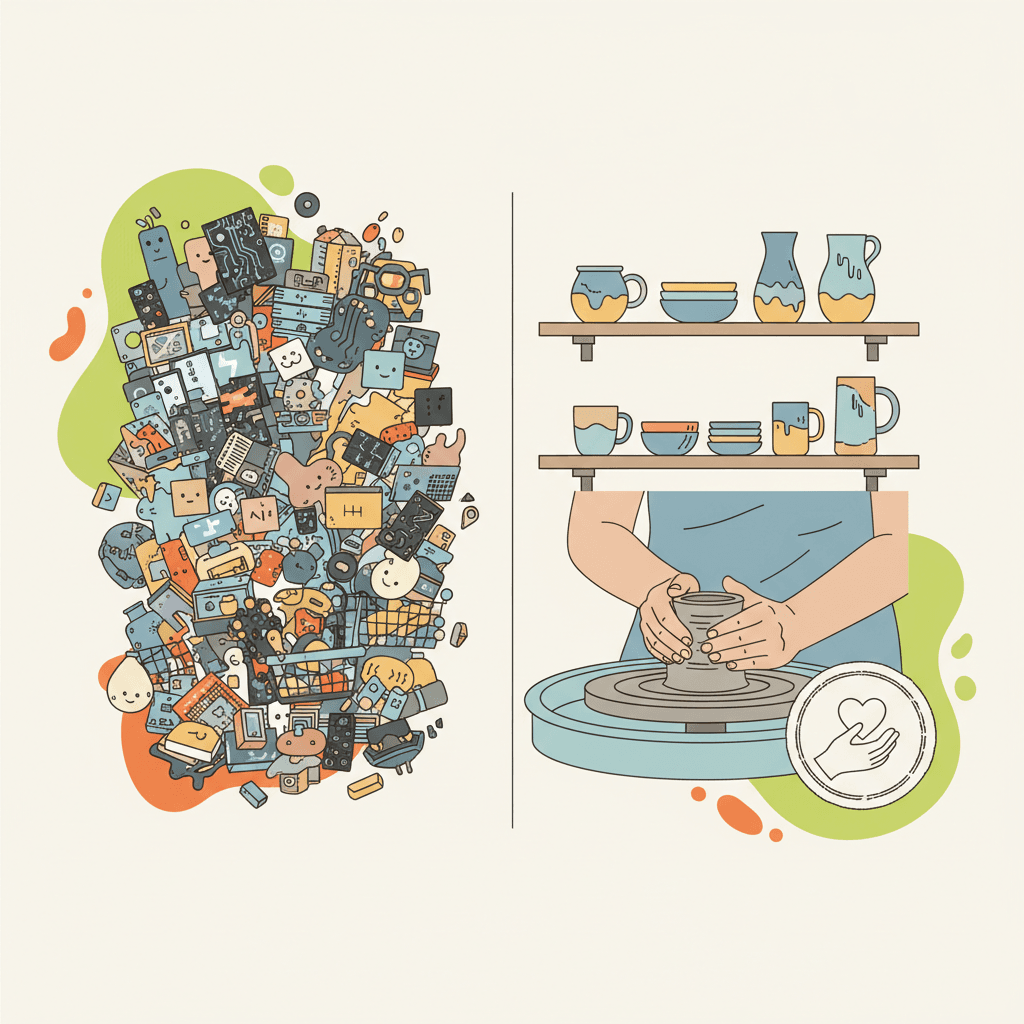
A flat illustration showing two columns: left side shows a cluttered marketplace with generic AI-generated pro
Where AI Is Actually Useful for Handmade Sellers
Product design and development
Use generative AI to visualize patterns, color palettes, and motifs before committing to manual production. This reduces material waste and speeds iteration. Luxury makers use AI to test design ideas, then craft the final object by hand.
Best practice: Use image models to explore surface pattern ideas for textiles or pottery, then clearly state in your listing: "Initial pattern exploration done digitally; final piece hand-designed and hand-made by me."
Marketing, listings, and content
Customer experience and support
AI-powered chatbots increase customer engagement by 45% and improve retention by 30%. Implement a simple help widget to answer FAQs (shipping times, care instructions, customization options). Train it on your own policies and always offer a path to talk to a human for custom requests.
Operations, pricing, and inventory
Even solo sellers can use basic AI-assisted analytics to forecast seasonal demand, identify top-converting listings, and focus production. For higher-volume studios, AI-driven tools can suggest restock timing and bundling recommendations.
The 2026 Buyer Mindset: Trust, Proof, and "Never AI"
Buyers increasingly question authenticity: *"Did a person actually make this?"* "Never AI-generated" is becoming a real selling point in segments like original art and one-of-one jewelry.
💡 "Trust me" is weaker than "watch me make it." The advantage in 2026 belongs to whoever can prove their work is human and one-of-one.
Winning sellers:
5 Common Mistakes Handmade Sellers Are Making with AI in 2026
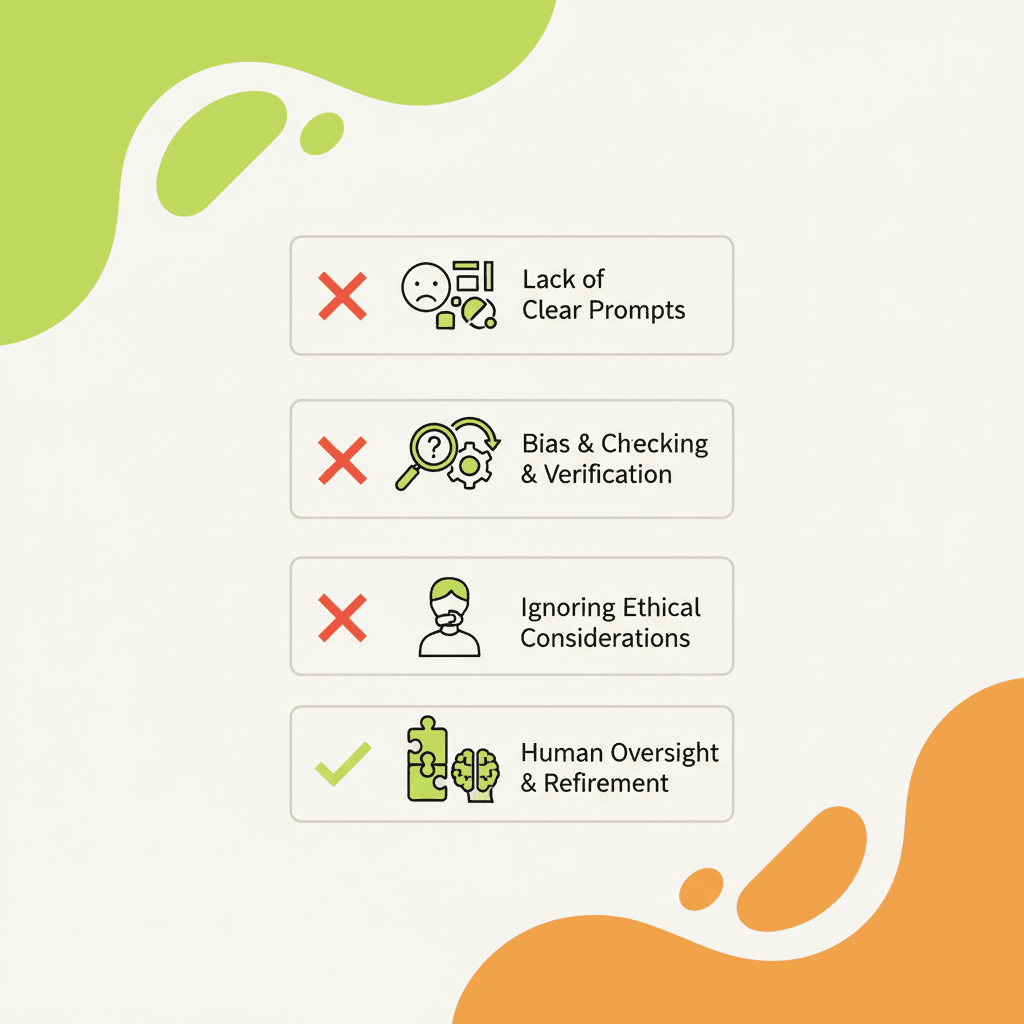
A flat illustration of a checklist with five items, each with a red X or green checkmark, showing common AI mi
Your 2026 Playbook: How to Use AI Without Losing Your Handmade Soul
FAQ
Do I have to disclose AI use on Etsy in 2026?
Yes. Etsy's Creativity Standards require disclosure for AI-assisted designs. Use "Designed by [your name]" instead of "Made by" for AI-assisted work. Failure to disclose can lead to listing removal or account suspension.
Will AI tools replace handmade sellers?
No. AI cannot replicate the human intuition, skill, and story behind physical creation. In fact, demand for genuine handmade is growing. AI is a tool for behind-the-scenes efficiency—not a replacement for your craft.
How can I prove my items are handmade in an AI world?
Share process content: studio photos, work-in-progress videos, tool close-ups. Include a "How this is made" section in each listing. Consider adding a line like "Handmade by me in [city]" and link to your process on social media.
The Bottom Line
AI didn't kill handmade. It forced handmade to show its face. The sellers who thrive in 2026 are the ones who use AI smartly behind the scenes—for design visualization, listing optimization, and customer support—while putting their humanity front and center. Your story, your hands, your process: that's what buyers are looking for.
Ready to streamline your handmade business with AI that respects your craft? Try MakeBox AI for free—it's built for sellers who want to automate the busywork without losing their voice. Learn more about our Etsy automation tools and Etsy SEO extension.
Want to talk through your setup?
Get in touch and I'll walk through what would actually move the needle for your shop or business.