 MakeBox
 Google's AI Search Engine Just Got a Brain Transplant: Gemini 3.5 Flash Goes Global
Google rolled out Gemini 3.5 Flash as the default model in AI Mode for all users globally, and revealed that AI Mode now serves over 1 billion monthly users. The company also introduced Gemini Omni Flash and a Daily Brief feature, signaling a major push toward agentic AI across its entire ecosystem.
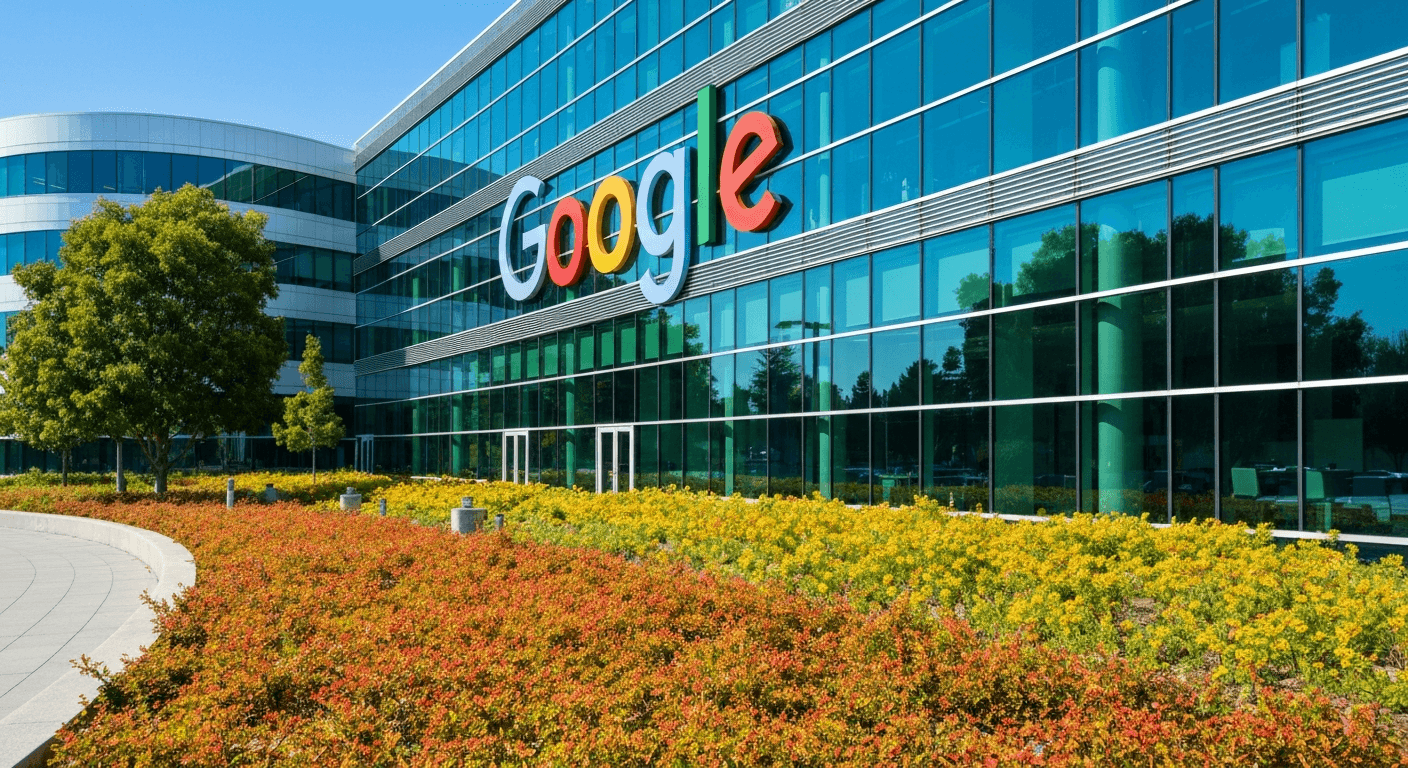
Google just performed a massive brain transplant on its search engine. As of May 19, 2026, Gemini 3.5 Flash became the default model powering AI Mode for every user worldwide—across all countries, languages, and devices. The company also dropped a flurry of numbers that reveal just how fast its AI ambitions are scaling: 3.2 quadrillion tokens per month processed across Google surfaces, up 7x from last year's I/O, and AI Mode crossing 1 billion monthly users. This isn't an incremental update. It's a declaration that Google's search future is agentic, conversational, and powered by its latest generation of models.
What happened
The rollout is sweeping. Google confirmed that Gemini 3.5 Flash is now the default model in AI Mode for everyone—no waiting list, no phased country rollout. The new intelligent Search box is live in all languages where AI Mode is available, and the seamless AI Search experience is running across desktop and mobile, worldwide. This isn't just a model swap; Google says Search queries reached an all-time high last quarter, and AI Mode queries are more than doubling every quarter since launch.
But the model updates extend far beyond Search. Gemini Omni Flash—a multimodal, real-time capable model—is available starting today in the Gemini app, Google Flow, and YouTube Shorts, with developer and enterprise API access rolling out in the coming weeks. Gemini 3.5 Flash itself is generally available via Google Antigravity (the company's internal inference platform), the Gemini API, Google AI Studio, and Android Studio. Google also launched Daily Brief, a personalized AI-generated news and update feature rolling out to Google AI subscribers (18+) in the Gemini app, initially in the U.S., with Google apps connected.
💡 Google is no longer treating AI as a feature toggle on Search. By making Gemini 3.5 Flash the default globally, the company is betting that conversational, agentic search is the primary interface—not a parallel experiment. The 7x token growth year-over-year is the clearest signal yet that user behavior is shifting en masse.
Why it matters
This is Google's most aggressive AI deployment yet, and it comes with a stark message to competitors like OpenAI and Microsoft. The scale is staggering: 8.5 million developers are building with Google models monthly, 19 billion tokens per minute are processed by Google model APIs, and more than 375 Google Cloud customers each consumed over 1 trillion tokens in the past 12 months. Google now claims 13 products with over a billion users each—a portfolio that includes Search, YouTube, Gmail, Maps, and now AI Mode.
The shift toward agentic AI is the deeper story. Google is pushing Search beyond answering questions into a system where users can create and manage AI agents directly in the search interface. This mirrors the broader industry trend—Microsoft's Copilot, OpenAI's ChatGPT with plugins, and Anthropic's Claude—but Google has the distribution advantage. Embedding agentic capabilities into the world's most-used product changes the calculus for every startup building AI-native search or assistant tools.
💡 The 3.2 quadrillion tokens per month figure is a competitive moat. No other company—not OpenAI, not Anthropic, not Meta—has disclosed inference volumes at this scale. Google is using its infrastructure advantage to train models on the fly and deploy them instantly across billions of users. For developers, this means Google's APIs are increasingly the lowest-latency, highest-throughput option for production AI workloads.
What it means for business
For founders and developers, the immediate takeaway is that Gemini 3.5 Flash is now the default inference engine for the world's largest search product. If you're building on top of Google's ecosystem—whether through Google AI Studio, Android Studio, or the Gemini API—you're getting this model at no extra cost, with the same pricing as before. The Gemini Omni Flash availability in Google Flow and YouTube Shorts opens up new multimodal use cases: real-time video analysis, interactive shopping, and contextual content generation.
Enterprise customers should pay attention to the Google Antigravity deployment. This is Google's internal inference infrastructure, and making it available for Gemini 3.5 Flash means enterprises can run high-throughput, low-latency AI workloads without worrying about capacity constraints. The 375 customers who each processed over 1 trillion tokens in the past year are likely setting the template for how large-scale AI adoption looks in regulated industries like finance, healthcare, and legal.
💡 For anyone building AI products, the key metric is not just model quality but deployment velocity. Google went from announcing Gemini 3.5 Flash to making it the default on Search globally in a matter of weeks. If you're a startup relying on a slower-moving model provider, you're already losing the distribution race.
What to watch next
The Daily Brief feature is a quiet but significant signal. Rolling out first to U.S. subscribers in the Gemini app, it suggests Google is moving toward personalized, proactive AI assistance—not just reactive search. If Daily Brief expands to all users and integrates with Google's full app suite (Calendar, Gmail, Maps), it could become the default morning interface for hundreds of millions of people.
Also watch for the developer and enterprise rollout of Gemini Omni Flash. If it delivers on its promise of real-time multimodal reasoning—processing video, audio, and text simultaneously—it could unlock entirely new categories of applications in education, customer support, and content creation. Google has the infrastructure to scale this faster than any competitor. The question is whether it can maintain quality and safety at that speed.
For now, the message is clear: Google's AI momentum is not a sideshow. It's the main event.
Want automation like this for your business?
Get in touch and we'll show you exactly what's possible for your setup.