 MakeBox
 Google Drops $40M in AI Tokens to Supercharge U.S. National Labs
Google commits $40 million in AI tokens and cloud credits to the DOE's Genesis Mission, giving all 17 U.S. national labs accelerated access to frontier tools like AI co-scientist. The move positions Google as a key player in the federal AI-for-science race alongside Microsoft, Nvidia, and OpenAI.
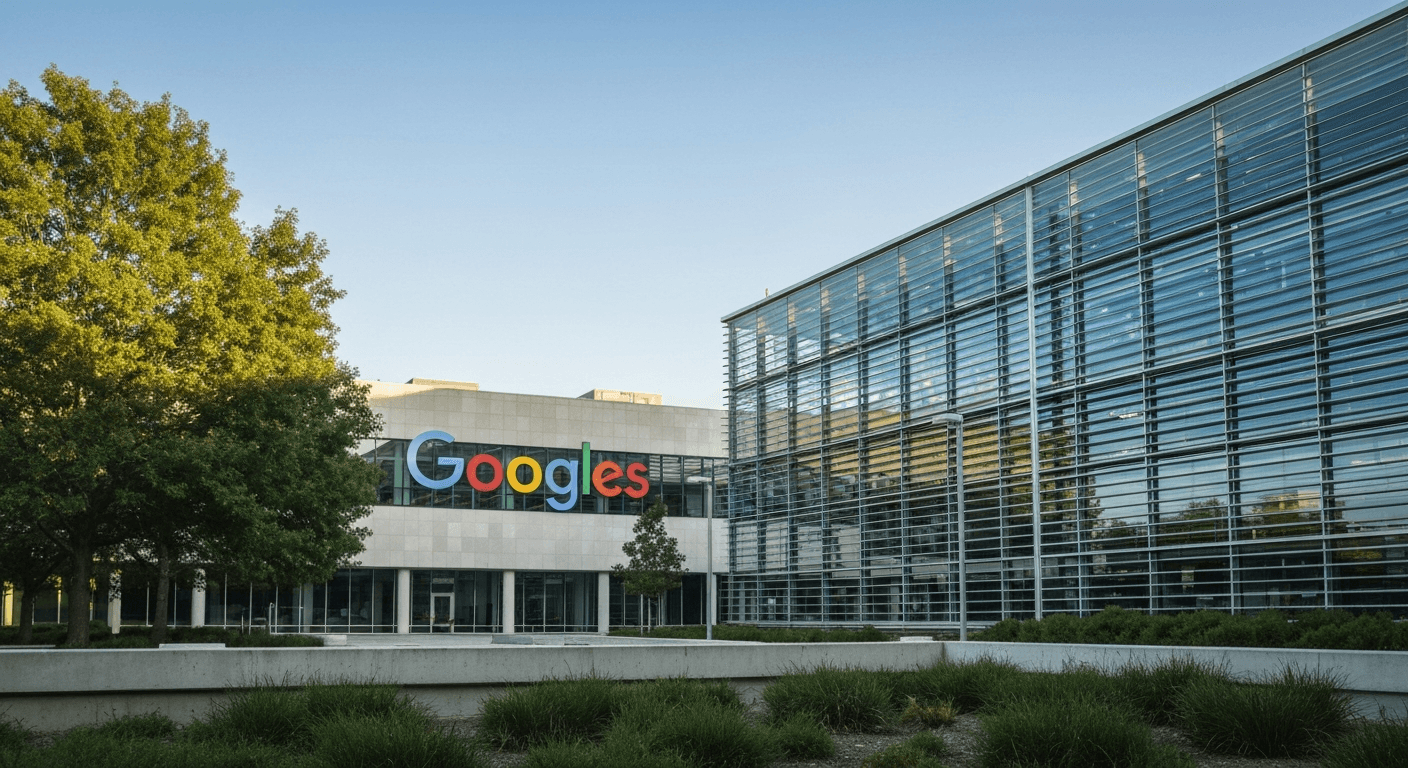
Google has committed $40 million in AI tokens and cloud credits to the U.S. Department of Energy’s Genesis Mission, a sweeping federal initiative to weaponize artificial intelligence for scientific discovery. The commitment, announced by Google DeepMind and Google Public Sector, unlocks immediate access to frontier AI tools for all 17 National Labs, starting with AI co-scientist—a multi-agent virtual collaborator built on Gemini—with plans to expand to other models in 2026. The move positions Google as a critical infrastructure provider in what the DOE frames as a national effort to accelerate scientific inquiry and strengthen energy and security capabilities.
What Happened
The Genesis Mission, orchestrated by the U.S. Department of Energy, is a federal AI-for-science initiative designed to pool national-lab data, models, and compute resources to speed up breakthroughs in energy, materials science, climate research, and beyond. Google is one of 24 entities that the DOE formalized partnerships with under the mission, according to Reuters. The cohort reads like a who’s who of AI and cloud computing: Microsoft, Nvidia, AWS, OpenAI, Anthropic, xAI, Oracle, Palantir, Cerebras, Groq, IBM, Intel, AMD, and Hewlett Packard Enterprise are all on board.
Google’s $40 million contribution comes in the form of AI tokens and cloud credits—essentially prepaid compute and model access that national labs can spend on Google Cloud and Gemini-powered tools. The accelerated access program begins with AI co-scientist, a multi-agent system that can autonomously propose hypotheses, design experiments, and analyze results. Google DeepMind says the tool is built on Gemini and designed to act as a virtual collaborator for researchers. By 2026, the company plans to expand access to other frontier AI tools, though it hasn’t specified which ones yet.
💡 Google’s $40 million is small relative to the DOE’s overall spend—the agency has already awarded **$320 million** for AI-for-science projects, including **$40 million across four national labs** for the **American Science Cloud** and **$30 million** to **Argonne National Lab** for the **Transformational AI Models Consortium**. But Google’s token-based model is a strategic bet: it hooks labs on its ecosystem early, making it harder to switch to competitors later.
Why It Matters
The Genesis Mission is not just another government R&D program. It’s a direct response to the accelerating AI arms race between the U.S. and China, and a recognition that scientific discovery—traditionally slow, expensive, and siloed—needs a shot of AI adrenaline. The DOE has framed the mission as a way to use AI to speed up scientific inquiry and strengthen U.S. energy and security capabilities.
Google’s involvement is notable because it signals a shift in how Big Tech is approaching federal research. Instead of selling cloud credits as a commodity, companies like Google are bundling them with proprietary AI models and tools. AI co-scientist, for example, is a multi-agent system that can autonomously propose hypotheses, design experiments, and analyze results. That’s a far cry from the days when national labs simply rented GPU clusters.
The competition is fierce. Microsoft has its own AI-for-science initiatives through Azure and partnerships with OpenAI. Nvidia is the de facto hardware backbone for most AI workloads. AWS has its own cloud and AI services. By offering tokens that can be spent on both compute and model access, Google is trying to create a sticky ecosystem where researchers become dependent on Gemini and its toolchain.
💡 The Genesis Mission is a landmark moment for AI-for-science policy. The $320 million already awarded, plus the $40 million from Google, represents a coordinated federal push to integrate AI into the scientific method itself. For companies like Google, it’s a chance to shape how that integration happens—and to lock in long-term contracts with the most prestigious research institutions in the world.
What It Means for Business
For founders, developers, and managers watching this space, the Genesis Mission is a signal that AI-for-science is no longer a niche academic pursuit—it’s a strategic priority for the U.S. government. That means new opportunities for startups and scale-ups that can build tools, platforms, or services that sit on top of national-lab infrastructure.
The token-based model that Google is using is particularly interesting. It’s essentially a prepaid API credit system, which lowers the barrier to entry for labs that might not have the procurement infrastructure to manage cloud budgets. If this model proves successful, it could become a template for how other federal agencies purchase AI services.
But there’s a catch: the Genesis Mission is a partnership, not a grant. Google is one of 24 entities, and it’s not clear how much influence any single company will have over the direction of the research. The DOE has already awarded $40 million across four national labs for the American Science Cloud and $30 million to Argonne National Lab for the Transformational AI Models Consortium. These are separate from Google’s commitment, and they suggest that the DOE is spreading its bets across multiple platforms.
💡 For businesses, the key takeaway is that AI-for-science is becoming a multi-platform ecosystem. No single provider—not Google, not Microsoft, not Nvidia—will dominate. Companies that can build interoperable tools or middleware that work across these platforms will be best positioned to capture value.
What to Watch Next
The Genesis Mission is still in its early stages. The DOE has begun awarding money, but the full rollout of tools and models is expected to take years. Google’s accelerated access program for AI co-scientist is a first step, but the real test will come in 2026, when the company plans to expand access to other frontier AI tools.
Watch for announcements from other Genesis Mission partners—especially Microsoft, Nvidia, and OpenAI—about their own commitments. The DOE has said it will continue to formalize partnerships, and the total amount of AI tokens and credits flowing into national labs is likely to grow. For now, Google’s $40 million is a down payment on a much larger bet: that the future of scientific discovery will be built on its cloud and its models.
Want automation like this for your business?
Get in touch and we'll show you exactly what's possible for your setup.