 MakeBox
 Florida’s AI Rule Is Just the Start: Courts Are Rebuilding the Legal Playbook from the Ground Up
Florida now requires lawyers to certify that AI-generated content in court filings is accurate, as federal agencies seize deepfake domains and propose new safeguards for LLM data. The legal industry is being forced to reconcile AI's productivity gains with its hallucination risks.
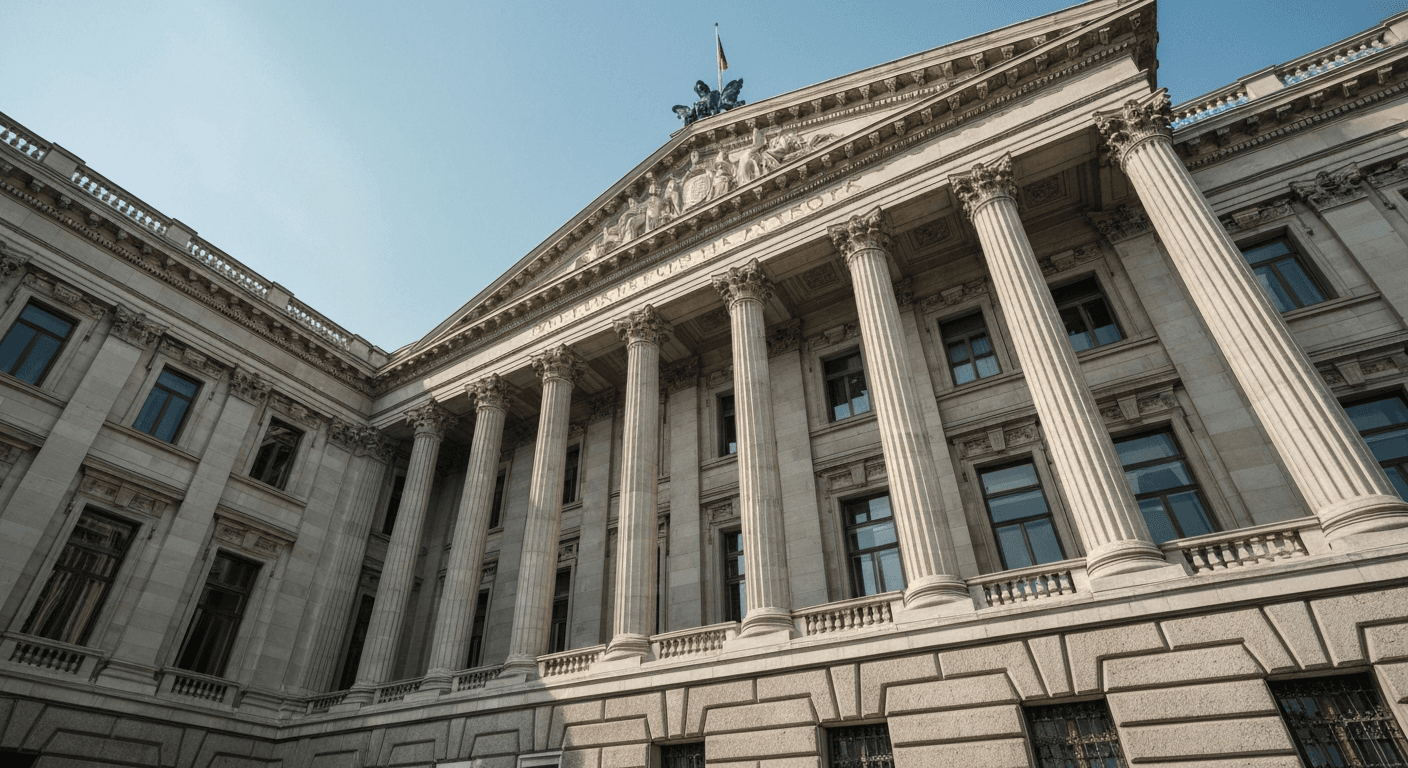
On May 28, 2026, the Supreme Court of Florida quietly rewrote the rules of engagement for every lawyer practicing in the state. The court amended Florida Rule of General Practice and Judicial Administration 2.515 to require that any document filed in a Florida court include a certification that all statements are true and that AI-generated content has been reviewed for accuracy. The move is the most concrete signal yet that the judiciary is done waiting for Congress to set boundaries on artificial intelligence in litigation. It landed at a moment when federal agencies are also moving fast: the U.S. Department of Justice and Homeland Security seized the deepfake domains CFAKE.com and SOCFAKE.com on June 12, 2026, using the TAKE IT DOWN Act, and the General Services Administration proposed a new clause on safeguarding data within large language model environments just five days later. The message is clear: courts and regulators are no longer treating AI as an emerging issue — it is a present-day liability that demands a new legal playbook.
What Happened
Florida’s rule change is the most granular litigation-specific development in the available record. The amendment to Rule 2.515 places the burden of AI accuracy squarely on the signer of the document — the lawyer or party — and prohibits any attempt to shift that duty to the tool itself. This is a direct response to the well-documented phenomenon of hallucination risk: JD Supra has noted that courts have already sanctioned lawyers for citing fabricated AI-generated cases in filings. Florida’s certification requirement codifies what had been a patchwork of judicial warnings and local orders into a statewide mandate.
Simultaneously, the June 12 seizure of CFAKE.com and SOCFAKE.com under the TAKE IT DOWN Act — a law targeting non-consensual deepfake imagery — signals that the federal government is pursuing enforcement against AI-enabled fraud. The domains were reportedly used for deepfake-related activity, though the exact nature of the content has not been fully disclosed. The seizure is a rare example of the government using a relatively new statute to act against AI-based harms before they multiply.
💡 **The Florida rule and the domain seizures represent two sides of the same coin: courts are forcing accountability for AI outputs, while law enforcement is targeting the infrastructure that enables AI abuse. Both moves are reactive, but they set a precedent that will shape litigation for years.**
On June 17, the General Services Administration proposed a revised GSAR clause 552.239-7001 that would require contractors to safeguard data within large language model environments. The proposed clause is a direct acknowledgment that the government’s own use of AI — and the data it processes — creates new vectors for privacy and security risks. Meanwhile, the Department of Commerce issued a Call for Proposals under the AI Exports Program, with submissions due June 30, 2026, indicating that the administration is also trying to promote AI exports while tightening domestic guardrails.
Why It Matters
These developments are not happening in a vacuum. The JD Supra AI topic page, maintained by its Privacy, Cyber & Data Strategy Group, states that the publication is tracking “key developments in U.S. AI regulation, enforcement, and litigation.” The breadth of that tracking — from state court rules to federal agency procurement clauses to criminal enforcement actions — underscores how quickly AI has moved from a niche concern to a cross-cutting legal risk.
What is striking is the piecemeal nature of the response. Florida acted alone. The DOJ and DHS used a statute passed specifically for deepfakes. The GSA moved on procurement. There is no single federal AI law governing litigation or liability. Instead, the legal system is adapting through a series of semi-coordinated actions that collectively create a patchwork of obligations. For lawyers, this means that compliance is not a matter of following one rule but of monitoring dozens of overlapping jurisdictions.
💡 **The absence of comprehensive federal AI legislation means that state court rules and agency actions are becoming de facto standards. Florida’s certification requirement could easily become a model for other states, just as the GSA clause could influence private-sector contracts.**
What It Means for Business
For companies that rely on AI in legal workflows — whether for document review, contract analysis, or generative drafting — the Florida rule is a wake-up call. The certification requirement makes it impossible to treat AI-generated text as a time-saving shortcut that can be filed without human review. Legal teams must now build audit trails, logging which parts of a filing were AI-generated and what review was performed. The same burden applies to in-house counsel who are not practicing in Florida but may be subject to similar rules if other states follow suit.
The deepfake domain seizures also have implications beyond individual liability. The use of the TAKE IT DOWN Act to seize domains suggests that the government is willing to take aggressive action against platforms that facilitate AI-generated abuse. Businesses that operate content platforms or offer AI tools for image generation should review their terms of service and compliance with the Act, especially if they allow users to generate realistic-looking media.
💡 **A practical takeaway: every organization that uses AI to produce documents, images, or data should implement a human-in-the-loop review process now, not after a court sanction or a domain seizure. The cost of a single hallucination in a court filing can far exceed the efficiency gains from automation.**
JD Supra has also emphasized that engineers and other professionals remain responsible for the accuracy of AI-assisted outputs and cannot shift that duty to the tool itself. This principle is not new in tort law, but its application to AI is being tested in real time. The GSA’s proposed clause on LLM data safeguarding adds another layer: companies that contract with the federal government will soon need to prove that their AI systems do not leak sensitive data, a requirement that will likely ripple through the supply chain.
What to Watch Next
The Florida rule takes effect on the date of its amendment, but the real impact will be felt in the first few months of enforcement. Look for disciplinary actions against lawyers who fail to certify properly, and for other state supreme courts to propose similar rules — possibly in California, New York, or Texas. The federal domain seizures and procurement clause changes are also likely to attract legal challenges, testing the limits of the TAKE IT DOWN Act and the GSA’s authority.
The Commerce Department’s AI Exports Program deadline is June 30, 2026; the proposals that emerge will reveal how the U.S. plans to balance export promotion with security concerns. And as the JD Supra coverage makes clear, the litigation landscape is evolving faster than the law can keep up. The next hallucination case — or the next deepfake seizure — could redefine the rules overnight.
Want automation like this for your business?
Get in touch and we'll show you exactly what's possible for your setup.