 MakeBox
 The $205 Billion Question: Why Alphabet and Tesla’s AI Spending Spooked Wall Street
Both tech giants reported strong Q2 revenue but posted negative free cash flow after jacking up AI capital spending, triggering sharp stock declines and a broader market sell-off. Investors are now demanding clear returns on the record-breaking infrastructure bets.
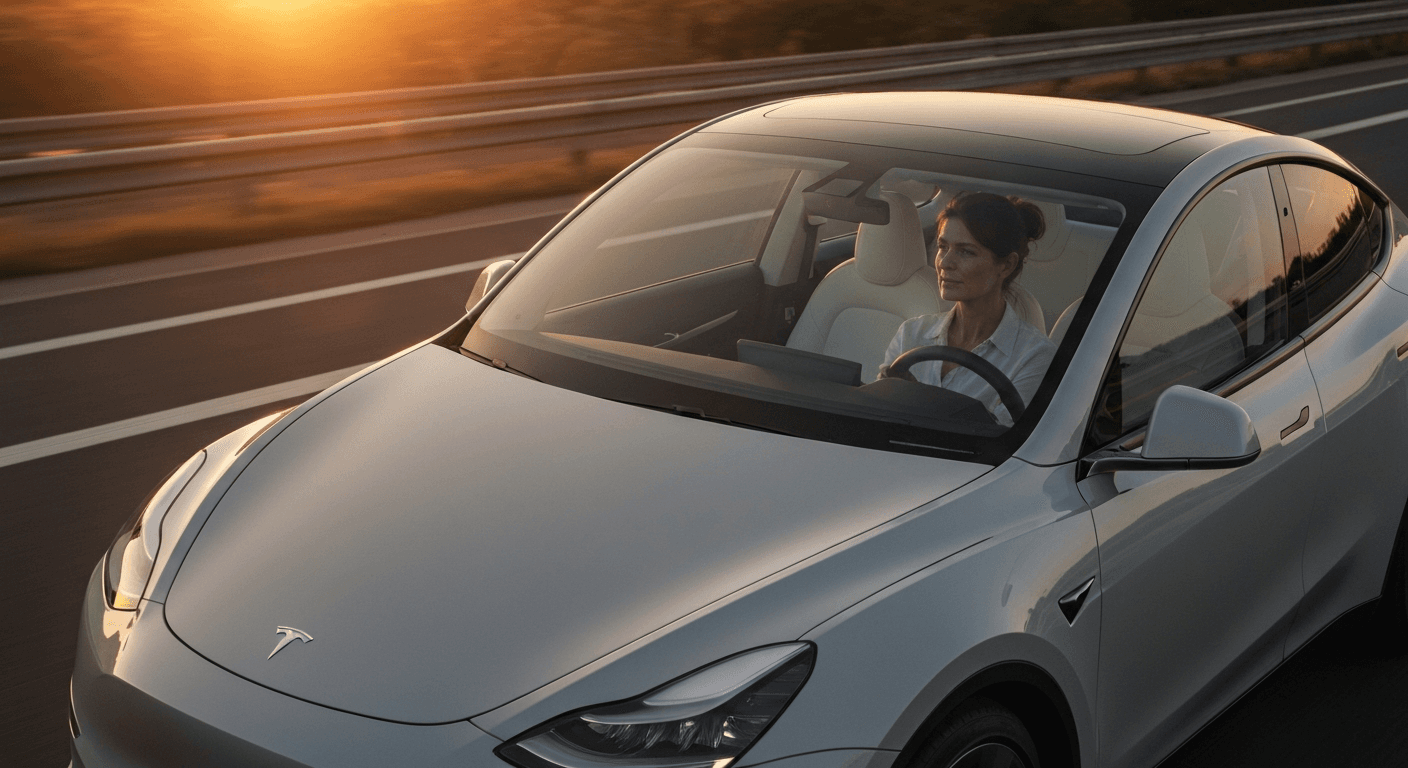
Alphabet and Tesla delivered strong second‑quarter revenue beats on July 22, 2026, but the celebrations were short‑lived. Both companies revealed aggressive new AI‑related capital spending plans that turned free cash flow negative for the first time in years—Alphabet’s first cash burn in memory, Tesla’s first in over two years. Investors responded by hammering the stocks: Alphabet fell as much as 4% in after‑hours and pre‑market trading, while Tesla dropped more than 5% in early trading. The message from Wall Street was clear: growth headlines are no longer enough when the AI spending bill runs into the hundreds of billions.
What Happened
Alphabet reported Q2 2026 results that beat market expectations on both revenue and earnings, with cloud revenue growth accelerating sharply on AI demand. Yet the company also announced it was raising its 2026 capital expenditure guidance to $195–$205 billion—up from a previous range of $180–$190 billion and more than double the $175–$185 billion it had signaled earlier in the year. The extra spending is aimed at data centers, chips, and computing equipment for AI workloads. The result: Alphabet posted negative free cash flow, its first cash burn in years, and has been selling stock to finance construction of AI data centers, adding dilution concerns.
Tesla likewise beat delivery estimates and posted stronger‑than‑expected revenue. But the company’s Q2 capex rose 142% year‑over‑year to about $5.79 billion, focused on autonomous driving, AI, and robotics. Tesla reaffirmed that 2026 capex will exceed $25 billion—roughly 200% year‑over‑year growth. That spending pushed free cash flow negative, and management warned investors that free cash flow will likely remain negative for the rest of the year as AI, robotaxis, and robotics spending continues. CEO Elon Musk said Tesla should keep investing “as fast as we can without it being too wasteful.”
💡 The key shift is that investors are no longer rewarding AI spending for its own sake. Both companies reported strong operational results, yet the market punished them for the sheer scale and immediacy of the cash burn.
Why It Matters
The sell‑off in Alphabet and Tesla didn’t happen in a vacuum. Following the earnings, S&P 500 futures fell about 0.4% and Dow Jones futures dropped around 0.5%. In Europe, the Stoxx Europe 600 declined 0.8%, Germany’s DAX fell 0.8%, and France’s CAC 40 lost roughly 1%. Analysts cited Alphabet and Tesla as dragging on global markets, with investors reassessing the broader “hyperscaler” AI spending boom estimated at around $800 billion for 2026 across major cloud and tech players.
For Alphabet, the negative free cash flow and rising debt—$6 billion in cash burn in the quarter—overshadowed a strong earnings beat. The company is now on track for its third consecutive monthly decline after a sharp rally in April. For Tesla, the stock has fallen 11% in July and is down 17% year‑to‑date, reflecting ongoing skepticism about the payoff from its AI and robotics bets. The company lacks the high‑margin, non‑auto segments that Big Tech peers can lean on, making its gamble riskier.
Wall Street remains broadly optimistic longer‑term, arguing that short‑term spending could yield long‑term AI returns. But the timing of those payoffs is uncertain. Commentators stress that physical AI spending—data centers, chips, robotics, robotaxis—could take years to translate into meaningful revenue and earnings, which is weighing on valuations today.
💡 The market is now applying a “show me the money” test to AI infrastructure. Even as Alphabet and Tesla frame their spending as building an “AI‑led future,” investors want to see a path to profitability, not just a path to scale.
What It Means for Business
For founders, developers, and tech managers, the message is twofold. First, the era of unlimited AI spending without scrutiny is over. If the two most prominent AI spenders can be punished for their capex, every company making similar bets will face tougher questions from investors. Second, the divergence between Alphabet and Tesla highlights a critical difference: Alphabet has a massive, cash‑generating ad and cloud business to fund its AI push; Tesla is still largely an auto company trying to pivot into AI and robotics. That makes Tesla’s gamble inherently riskier in the eyes of the market.
The broader implication is that AI monetization timelines are now a first‑order concern. Companies that can demonstrate near‑term revenue from AI—such as cloud services, AI‑powered advertising, or enterprise tools—will be rewarded. Those that ask investors to wait years for robotaxis or humanoid robots will face increasing skepticism.
💡 A practical takeaway: if you’re building an AI‑powered startup, your pitch deck needs to show a clear, near‑term revenue path—not just a vision of a future where AI transforms everything. The market’s patience for “build it and they will come” has run out.
What to Watch Next
All eyes will be on the next wave of hyperscaler earnings—Amazon, Microsoft, and Meta. If they also raise capex guidance without showing offsetting revenue growth, the sell‑off could spread. For now, Alphabet and Tesla have set a new benchmark: strong earnings are no longer enough to offset the cost of building an AI empire. The question is whether the returns will eventually justify the investment—and how long investors are willing to wait.
Want automation like this for your business?
Get in touch and we'll show you exactly what's possible for your setup.