 MakeBox
 The AI Backlash Gets a Manifesto: Hype, Hallucinations, and the Fight for Human Oversight
A new MR Online commentary argues that the six biggest generative AI systems are neither intelligent nor trustworthy, pointing to a BBC test that found roughly 20% of AI news summaries contained factual errors. The essay calls for organized resistance — including a human override on machine decisions and worker involvement in AI design.
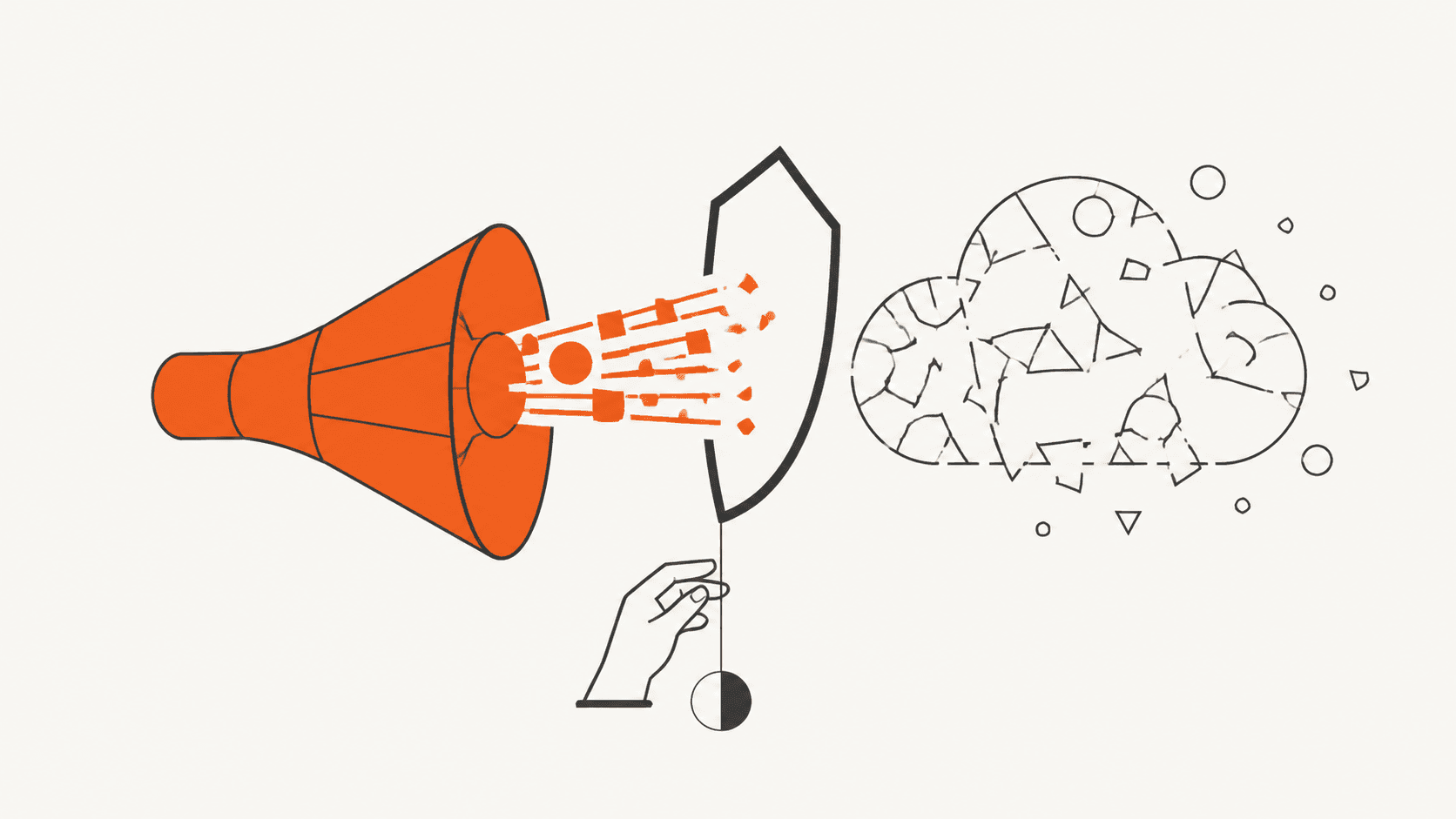
The most prominent AI systems on the market are not intelligent, not reliable, and should be met with organized resistance — that is the blunt argument of a new commentary published by MR Online on August 6, 2026. The essay trains its sights on the six best-known generative AI platforms — ChatGPT (OpenAI), Claude (Anthropic), Gemini (Google), Grok (xAI), Copilot (Microsoft), and Llama (Meta) — and asserts that none of them represents a meaningful step toward artificial general intelligence. More provocatively, it argues that the real threat is not superintelligence but the mundane, error-prone deployment of these systems across schools, businesses, media, and the military.
What happened
The MR Online piece is an opinion and commentary, not a breaking news report, but its timing and targets give it weight. It arrives as a consolidation of a longer-running critique: that the industry's claims of intelligence are overstated, that hallucinations — "erroneously constructed responses," in the author's words — are routine, and that the data fueling these systems is fundamentally compromised. The essay treats the six platforms not as rivals but as a single phenomenon: interchangeable front ends for the same underlying promise and the same underlying flaws.
The essay leans on a concrete data point: a BBC test from February 2025 in which leading AI models summarized BBC news stories. About 20% of the answers contained factual errors, including incorrect numbers and dates. For a technology being sold into newsrooms, classrooms, and corporate decision-making, a one-in-five error rate is not an edge case; it is a structural flaw.
The author also argues that multimodal and generative systems do not transcend human prejudice — they replicate and amplify it, because they are trained on web-scraped data that includes discriminatory and hateful material. In this view, the same systems marketed as productivity tools are quietly encoding bias into everyday operations.
💡 The core claim is that AI's problem is not that it is too smart, but that it is not smart enough — and that its flaws are distributed at scale.
Why it matters
The commentary is not an isolated salvo. MR Online has spent over a year building this case. In March 2025, it published "Exposing the big con: The false promise of Artificial Intelligence," which argued that tech companies are overselling AI and that current systems have "largely exhausted their potential." In February 2026, another piece, "I am afraid of AI," framed the technology as a driver of war, surveillance, and social harm, and expressed support for a pause on frontier AI development.
The skepticism extends well beyond the publication's readership. A 2024 arXiv paper, "Misrepresentation of AI Capabilities: Hype and its Risks," made a closely aligned argument: overestimated AI capabilities can lead to harmful technology deployment, distorted policy, and negative societal impact. Academic research and polemical commentary are converging on the same conclusion — that the gap between AI marketing and AI reality is itself a public risk.
💡 The opposition to AI is hardening into a coherent position: hype is not just annoying, it is dangerous, because overstated capabilities are being used to justify deployment in high-stakes domains.
What it means for business
For organizations that have rushed to integrate generative AI, the article reads as a warning label. If leading models produce erroneous answers in roughly one in five summaries, then deploying them in customer service, legal review, content production, or hiring is not a purely technical decision — it is a risk-management decision. The essay's proposed remedies are deliberately concrete: resist bigger data centers, restrict AI's role in social institutions, involve workers in AI design, and — most importantly — require human override of AI decisions.
That last demand deserves attention. Even critics who reject the article's politics will recognize "human override" as a principle that sits at the center of broader debates about AI accountability. The demand to resist bigger data centers, meanwhile, implicitly challenges the enormous capital expenditure underpinning the current AI buildout. And the argument for worker involvement in design mirrors emerging practices around algorithmic impact assessments and organized tech labor.
💡 The practical takeaway for business leaders: treat AI output as draft material requiring verification, and build human oversight into the workflow by default — before regulators or labor pressure force the issue.
What to watch next
The significance of the August 2026 piece is that it moves the conversation from "is AI overhyped?" — a question that is rapidly settling — to "what should we do about it?" The calls for a frontier-AI pause, for scrutiny of data center expansion, and for human override are no longer fringe demands; they are the platform of a growing resistance movement. Over the coming months, watch whether these positions migrate from op-eds into policy proposals, shareholder resolutions, and labor negotiations. If they do, the AI industry's biggest battle will not be against a rival model — it will be against the accumulating evidence of its own unreliability.
Want automation like this for your business?
Get in touch and we'll show you exactly what's possible for your setup.