 MakeBox
 How to Write Etsy Tags That Actually Get Found in 2026
Master Etsy tags in 2026: use all 13 slots with multi-word phrases, avoid common mistakes, and get concrete examples to boost your search rankings.
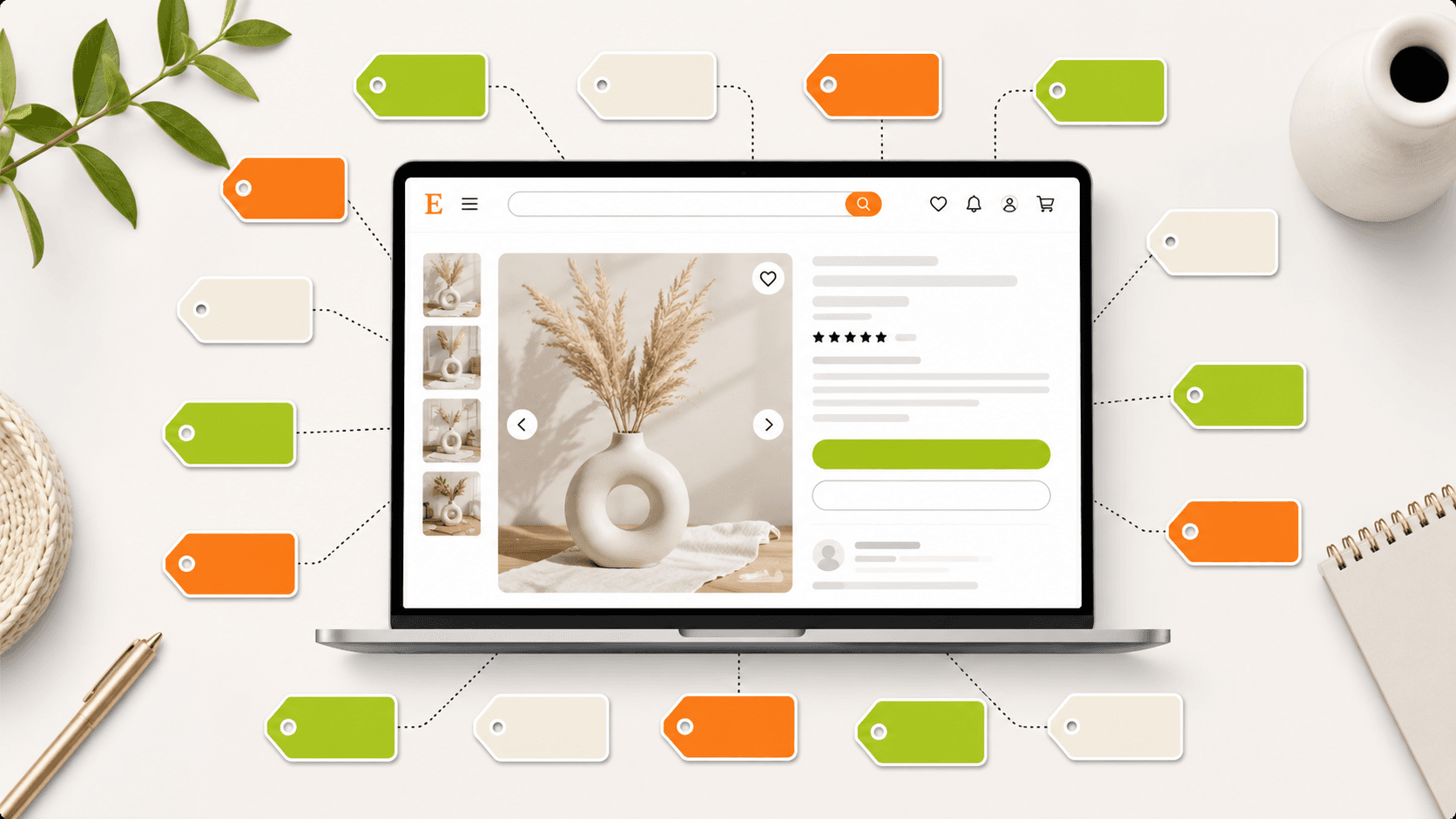
You've filled all 13 tag slots, but your listings are still buried on page 5. I've been there — and the problem isn't how many tags you use, it's how you use them.
💡 In 2026, Etsy tags still matter more than ever — but only if you treat each of your 13 slots like a mini Google Ad keyword: specific, multi-word, and buyer-focused. Generic one-word tags won't cut it.
Why Your Tags Aren't Working (And What to Do About It)
Etsy allows up to 13 tags per listing, each up to 20 characters.[12][1][5] That's 260 characters of search real estate. But most sellers waste it with single words, filler, or repetition. Here's what actually works in 2026.
The 2026 Tag Rulebook: 10 Principles That Drive Results
1. Use All 13 Tags — But Make Each One Earn Its Slot
Etsy's own Seller Handbook says: "Do use all 13 tags. Each tag you add is an opportunity to be matched with a shopper's search."[12] But relevance beats raw quantity. If a tag isn't 100% buyer-language, leave it out.
2. Always Use Multi-Word Phrases (2–5 Words)
Single-word tags like "mug" or "gift" are almost useless. Etsy explicitly recommends multi-word phrases within the 20-character limit.[12] Multiple 2026 guides confirm that phrases (3–5 words) consistently outperform single words.[1]
💡 Long-tail keywords like "personalized bridesmaid mug" reduce competition and attract buyers who already know what they want. Never use a single word unless it's a proper noun (and even then, avoid trademarks).
3. Don't Repeat Words Across Tags
If you have "bear art" and "bear design", you're wasting a slot. 2026 checklists explicitly say: "No tags repeat the exact same words as other tags."[3] Combine them: "bear design" + "animal nursery art" covers more ground.[2]
4. Skip Plurals and Misspellings
Etsy handles plurals and common typos automatically. Adding "mug" and "mugs" or "necklase" only duplicates your effort.[1][2][9] Use that space for a fresh keyword phrase.
5. Stick to One Language — Don't Translate Yourself
Mixing languages in tags confuses Etsy's algorithm. Use only your shop's primary language; Etsy handles translation in search.[2][4][14]
6. Don't Duplicate Categories and Attributes
Your listing's category and attributes (e.g., color, size) already signal key info. Tags should extend beyond those — think style, occasion, buyer intent, niche descriptors.[2][5][3]
7. Build a Balanced Tag Set Across Buyer Intents
A powerful 13-tag set covers five search intents:[4]
Aim for roughly 3–4 product tags, 3 intent, 2–3 style/occasion, 2–3 material/technique.[7]
8. Research Tags with Etsy Autocomplete
Open Etsy in a private window, start typing your product, and collect the autocomplete suggestions. These are real high-volume searches. Repeat for "gift for [recipient]" and "[product] aesthetic". You'll get 40–50 buyer phrases — pick the best 13 across different intents.[4][9]
9. Let Tags Support and Extend Your Title
Your title should include your main keyword. Tags then expand your footprint with synonyms, specific variations, and additional occasions not in the title.[7][4] One nuance: make sure your main keyword appears in both title and at least one tag so Etsy clearly understands relevance.[6][14]
10. Update Tags Based on Data — Not Gut
Etsy's Shop Stats show which search terms bring traffic. Refresh underperforming tags regularly. Many 2026 guides recommend quarterly refreshes or A/B testing by changing 2–3 low-performing tags every few weeks.[12][1][8]
Concrete 13-Tag Examples (Good vs. Bad)
Example 1: Handmade Ceramic Mug (Boho, Giftable)
Bad tag set (common mistakes):
mug, coffee, gift, ceramic, handmade, uniquemug, mugs, coffee mugpresent, artGood 13-tag set:
handmade ceramic mug ← long-tail productspeckled coffee cupboho pottery mugwheel thrown mug ← material/processstoneware coffee cupminimalist kitchen mug ← style/aestheticgift for coffee lover ← buyer intent/recipientmug gift for herunique pottery gift ← psychologycozy morning mug ← lifestyle vibedishwasher safe mug ← featurehandmade home decor ← broader discoveryboho kitchen decor ← room/style context💡 Every tag here is a phrase real buyers type. No word repeats. Covers product, style, recipient, occasion, material, and emotional benefit.
Example 2: Personalized Gold Birth Flower Necklace
birth flower necklacegold name necklacepersonalized mom giftdainty gold necklaceminimalist jewelry giftnecklace for herbirthday gift for mompush present jewelryflower pendant necklacecustom engraving jewelrysentimental gift ideaeveryday dainty necklaceboho chic necklaceExample 3: Printable Wall Art (Digital Download)
neutral abstract printsscandinavian wall artset of 3 wall printsdigital download artliving room wall decorprintable wall art setmodern minimalist artboho neutral decorinstant download printsgallery wall printableapartment wall decorbudget home decor artlarge wall art filesCommon Mistakes to Avoid (2026 Update)
How to Audit and Refresh Your Tags (Step-by-Step)
💡 Focus your tag updates on listings that already get impressions but few sales — these are your biggest opportunities for improvement.
FAQ
Can I use the same tag for multiple listings?
Yes, but avoid making it a crutch. Each listing should have a unique tag set tailored to its specific product, style, and audience. Duplicate tags across similar items can cannibalize search exposure.
How often should I change my Etsy tags?
At least every quarter, or whenever you see a drop in traffic. Etsy's own guidance is to refresh tags on listings that get less traffic.[12] A/B testing every few weeks with 2–3 tags is a solid strategy.[8]
Do tags still matter if I have a great title?
Absolutely. Tags act as your title's support network. They let you add synonyms, occasions, style descriptors, and buyer-intent phrases that wouldn't fit in the 140-character title. Together they create a full keyword footprint.[7][4]
Start Writing Tags That Actually Work
Stop guessing and start using the same strategies that top sellers use. MakeBox AI helps you research, generate, and optimize your 13 tags — all based on real Etsy search data. The best part? It's free to start.
Want more SEO help? Check out our Etsy SEO Extension to optimize titles, tags, and descriptions in one click.
Sources (cited throughout): Etsy Seller Handbook; ListingView; Printify; ListingForge; ListifyAI; ListyBox; BetterListing; Artomate; MyDesigns; Katrin Esche; multiple 2026 YouTube strategies.
Want to talk through your setup?
Get in touch and I'll walk through what would actually move the needle for your shop or business.